Step into the Process
At Izar, every piece of Sejnane’s pottery we showcase (mugs, vases,
bowls, pitchers etc.) reflects the group’s shared way of life.
Our Philosophy
Our collections are born from the rich artistic heritage of Tunisia, where
this particular craftsmanship has been passed down through
generations, from mother to daughter.
All stages of the pottery-making process, including cooking utensils, dolls and animal figurines inspired by the environment, are performed by women. Each piece is painstakingly shaped and finished entirely by hand, preserving techniques that go back 3000 years. At GIE la poterie de Sejnéne they work closely with local artisans, selecting pieces that reflect the community’s spirit and culture.
All stages of the pottery-making process, including cooking utensils, dolls and animal figurines inspired by the environment, are performed by women. Each piece is painstakingly shaped and finished entirely by hand, preserving techniques that go back 3000 years. At GIE la poterie de Sejnéne they work closely with local artisans, selecting pieces that reflect the community’s spirit and culture.

01. Clay Preparation
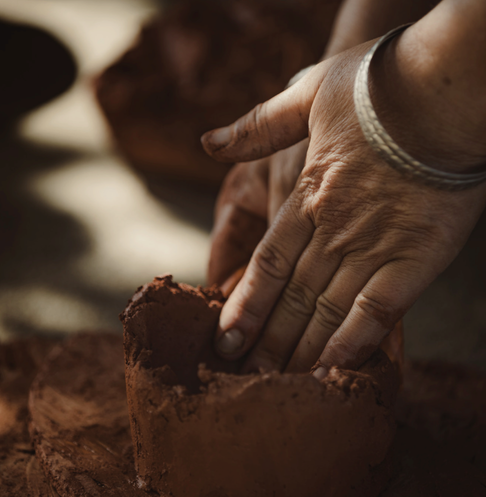
The careful preparation of clay extracted from wadi beds at this early
stage of work, is essential for the quality and consistency of the raw
material. The clay is cut into blocks, purified and soaked in water, older
pottery is crashed and mixed in the clay, before being kneaded with bare
feet and hands.
02. Forming by Hand
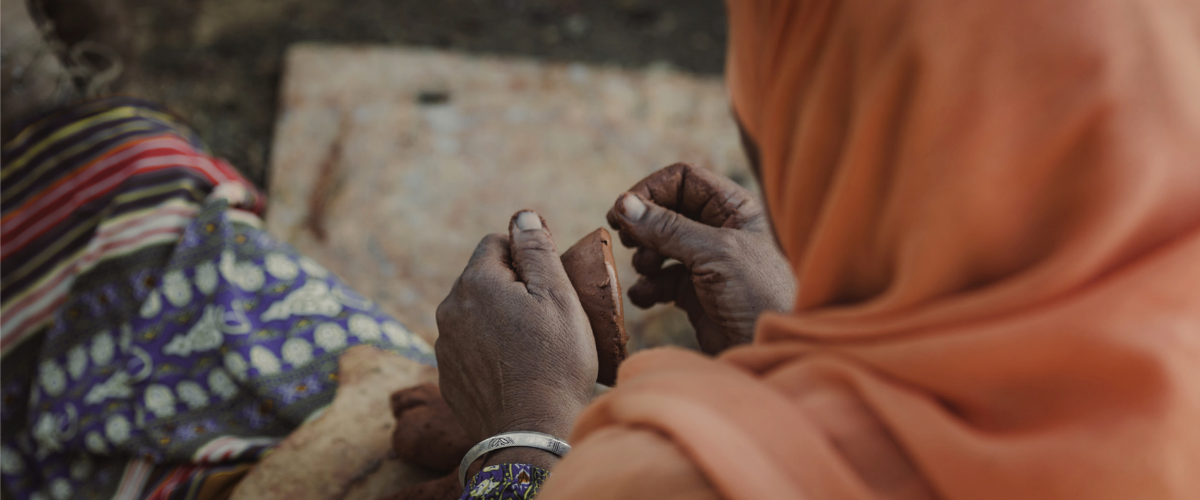
By using the coil technique and without a potter’s wheel the women of
Sejnane still produce objects that require time, repetition and control.
Variations in line, thickness, and proportion are not flows, but signs of
the human hand at work.
03. Drying & Refinement
Once formed, the refinement and polishing of the surface is done with
the use of shells. At this stage, edges are softened, bases are cleaned etc.
The pottery then is sun-dried and sometimes repolished and details are
adjusted.
04. First Firing
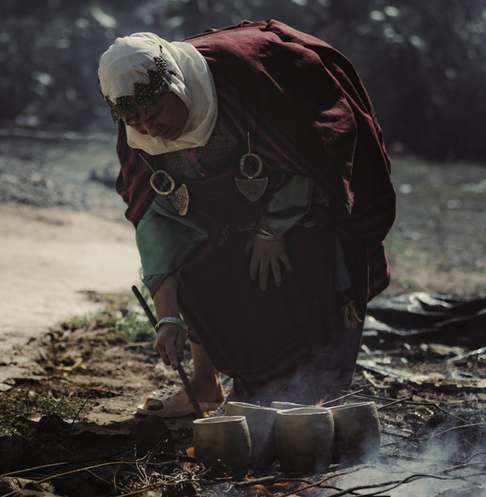
The pieces are pit fired. Pit firing is the oldest known method for baking clay and transforming it into ceramic pottery, dating back as early as 29.000-25.000 BCE. Unglazed pots are nestled together directly into a hole in the ground and burned alongside organic combustible materials (cow dung). The temperature typically reaches a maximum of 600 C to 1.100 C, classifying the resulting pottery as low-fired earthenware. Once fired, the pots are then decorated with two tone geometrical patterns
reminiscent of traditional tattoos and Berber weaving. All colors used are derived from local plants and are nontoxic.
A Connection to Tunisia
Sejnane’s women have a deep knowledge of their land and their
heritage is imprinted in their earthenware we curate. A piece of culture is
a tangible or intangible element that reflects a group’s shared way of
life, such as an artifact, a tradition, or a belief. It can be a physical object
like a tool or a work of art, an everyday object etc. GIE la poterie de
Séjnene are working directly with artisan communities, they help support
local craftsmanship and preserve techniques that have been part of
Tunisia’s cultural identity for generations.